AMC Exam
AMC clinical exam format and timing: the whole day explained
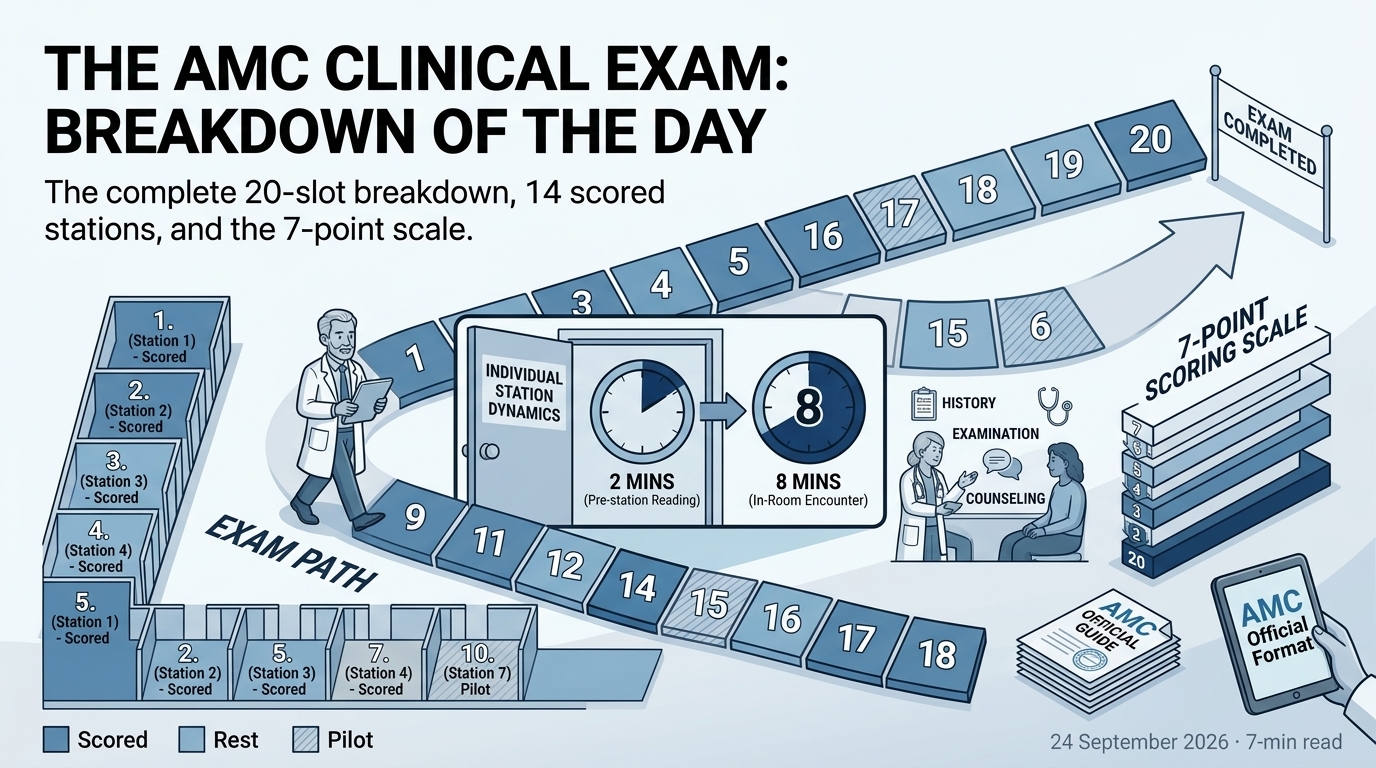
The AMC clinical exam format and timing in one place: 20 slots, 14 that count, 2 minutes at the door, 8 in the room, and how the morning runs.
10 min read
4 min read
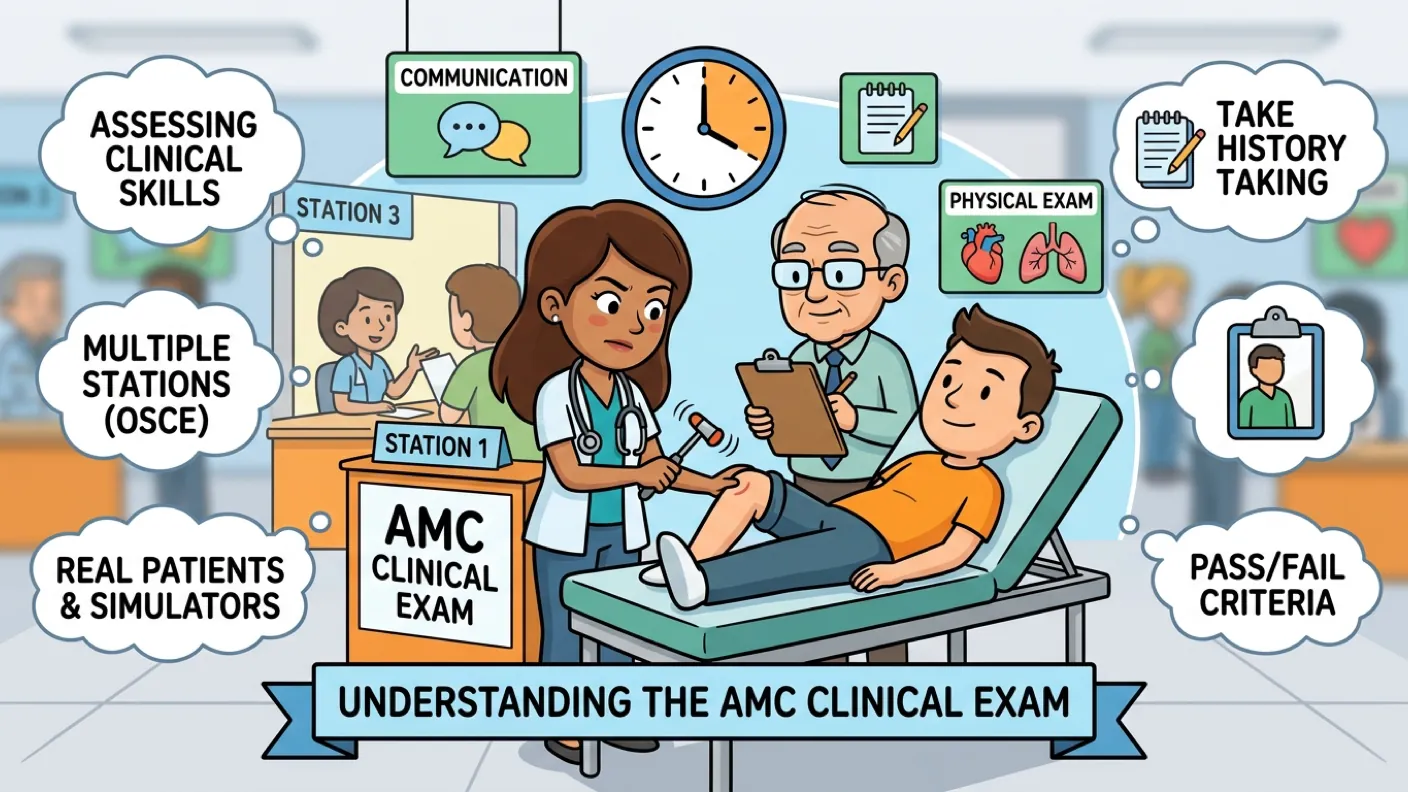
What happens once you pass AMC 1: booking the clinical exam, sitting it in Melbourne or online, results, the AMC certificate and the road to registration.
The AMC clinical exam is the second half of the AMC’s standard pathway: the practical examination an international medical graduate sits after passing AMC 1, the CAT MCQ. Candidates call it AMC 2 and, less accurately, the AMC OSCE. The result for AMC 1 arrives, it says pass, and for about a day that is enough. Then the question changes from “will I get through” to “what is the next thing”, and the next thing turns out to be an exam that almost nobody who has just passed the first one can describe.
This is a plain account of it. The exam itself is described from the AMC’s Clinical Examination Specifications and its clinical examination page, which are the two documents worth reading before anyone else’s summary, this one included. What comes after a pass is from the Medical Board of Australia.
The MCQ tested what you know. The clinical examination tests what you do with it in a room with a patient, and the standard it is marked against is a graduating final-year medical student about to start their intern year in Australia. Not a registrar, not a consultant. Someone safe to let loose on a ward tomorrow morning with supervision.
Two things people worry about that they do not need to. The AMC’s own FAQ says the MCQ result does not expire, and the specification sets no limit on the number of attempts at the clinical. You can take the time to prepare properly.
You rotate through 16 stations, 14 of which are scored, with 4 rest stations among them. Each one is 2 minutes of reading time and 8 minutes in the room, a single global rating decides it, and a pass is 9 or more of the 14. How those pieces fit together, what each kind of station asks of you and how the morning runs is its own walkthrough. This post is about everything around it.
It is delivered two ways: in person at the AMC Test Centre in Melbourne, or online from wherever you are. The online version uses the same blueprint and the same marking, minus the hands-on parts of physical examination; the practical difference is a webcam, a Windows 11 machine with a screen of at least fourteen inches, and wired headphones, which the AMC insists on. Candidates who arrive or log in late are not admitted, because the whole circuit moves together.
Places are released in scheduling windows, published as PDFs on the AMC site a few months ahead, and you apply by email to the clinical examinations team with the details the notice asks for. Allocation is first applied, first allocated. Candidates already working in Australia on limited registration with Ahpra are given priority, and sometimes an early window of their own. If a window fills, there is an expression-of-interest waitlist, which the AMC is clear does not guarantee anything.
Payment confirms the place. It is several thousand dollars, the online sitting costs more than the in-person one, and withdrawing after you are scheduled gets no refund outside exceptional circumstances. The current figures are on the AMC fees page, which is the only place to read them, because they change.
Results are released to your AMC account at 4:00pm on the Friday three weeks after your sitting. Never by telephone. A pass generates the AMC certificate within three to five business days — provided your primary medical degree has already been verified through ECFMG’s EPIC service, which is the one prerequisite people discover late. That certificate is what the Medical Board of Australia and Ahpra look at.
The certificate is not registration. With it you apply for provisional registration, complete twelve months of supervised practice — a minimum of 47 weeks full-time equivalent — in a hospital or general practice position, and then apply for general registration. The exam is the gate to the year, not the end of the road.
The clinical examination is not the only way to the certificate. The workplace based assessment replaces it for candidates who have passed the MCQ, already hold registration, and are appointed to a position at an accredited hospital or general practice. Instead of a morning of stations it is six to twelve months of assessment on the job. It is only open to people who already have the job, so for most readers of this post it is something to know exists rather than something to choose between.
We are not affiliated with the AMC. Where this post and the specification disagree, the specification is right, and we would like to hear about it.
AMC Exam
The AMC clinical exam format and timing in one place: 20 slots, 14 that count, 2 minutes at the door, 8 in the room, and how the morning runs.
10 min read

AMC Exam
Seven things that go wrong inside an AMC clinical station, why each one costs the global rating, and what to do differently.
6 min read
Preparation
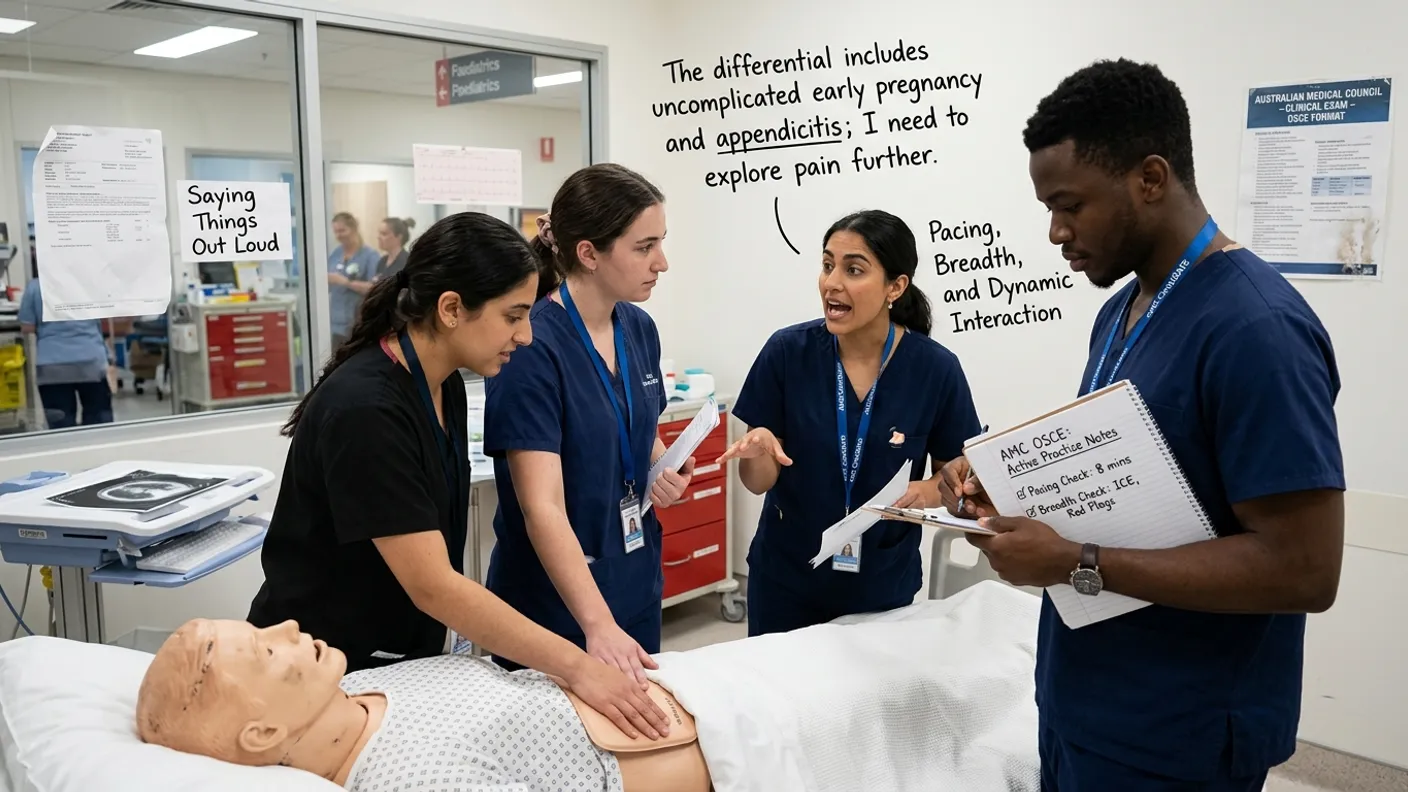
Notes on the part of AMC preparation that does not happen at a desk: pacing, breadth, and saying things out loud. Most people are busy doing the other half.
5 min read